
What we study
From single cells to synthetic communities
Cell-to-cell heterogeneity within populations is a resource to be designed, monitored, and exploited as the primary engineering variable in next-generation bioprocesses or for advanced biocomputing and biosensing.
Collective behaviour in microbial populations & the emergence of subpopulations

Even genetically identical cells don't all behave the same way. Our research shows that this diversity isn't just random noise, it emerges from how cells time the activation of their internal gene circuits, how they allocate limited resources, and how they respond to changes in their environment. Together, these factors cause distinct cell subpopulations to form and persist, almost like competing species coexisting within the same population. These subpopulations interact with each other, producing collective behaviours such as flipping between states, cycling rhythmically, or "remembering" past conditions. Read more
Subpopulation networks as a framework for biological inference and biocomputing
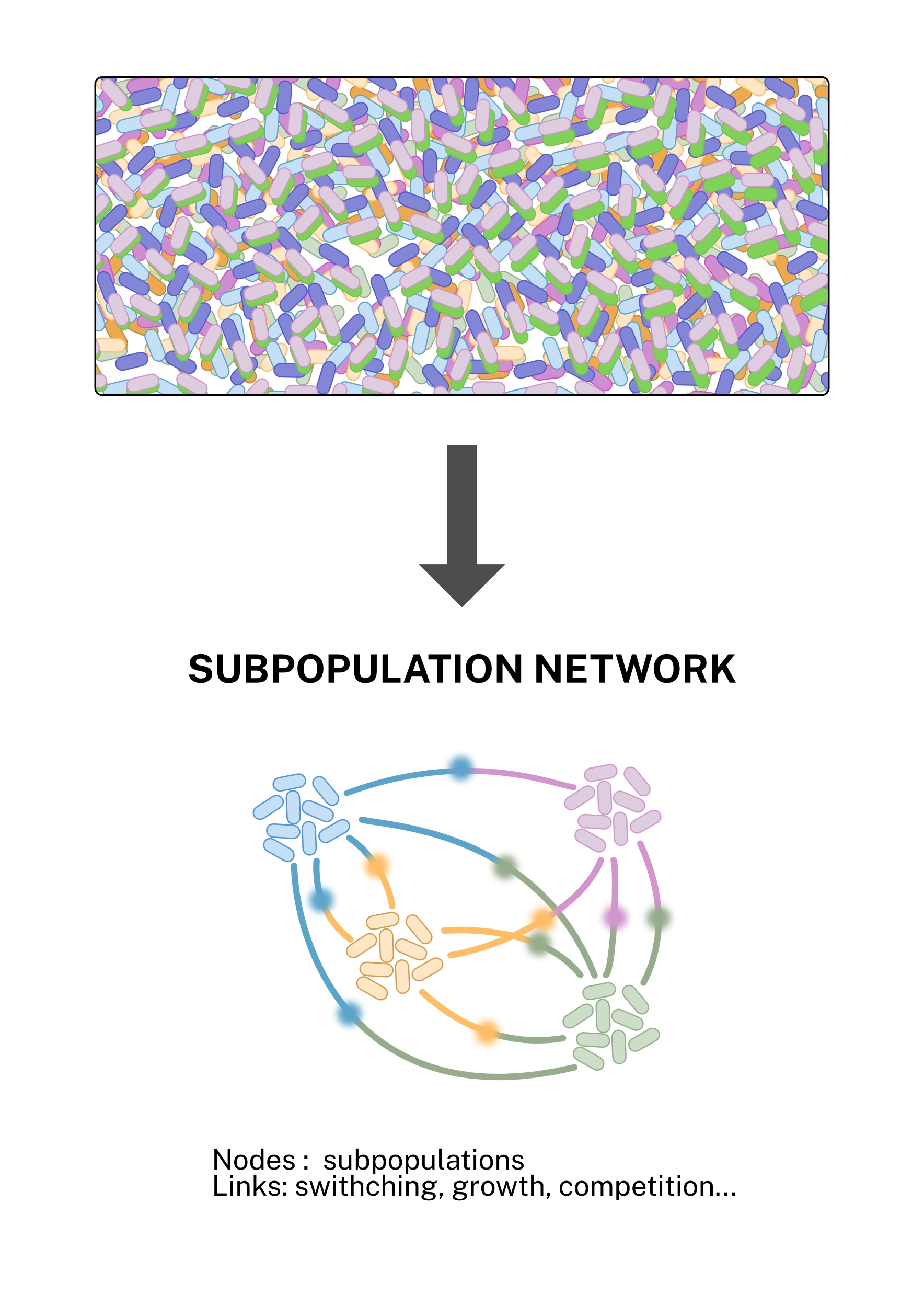
A second line of research uses these subpopulation networks as a simplified model of cell populations. Instead of simulating every individual cell, a small number of interacting subpopulations can capture the essential behaviour of the whole population, making it possible to analyse live data (like flow cytometry measurements) in real time. This simplified view also uncovers information that standard bulk measurements miss entirely, such as how plasmids replicate, how cells resist stress, or how they secrete proteins. Because these subpopulation networks naturally process and interpret complex biological signals, they can even be used like a computing system, one built from living cells rather than silicon, to help make sense of complex biological processes. Read more
Bioprocess digitalisation and control: from population structure to self-regulating, scalable processes
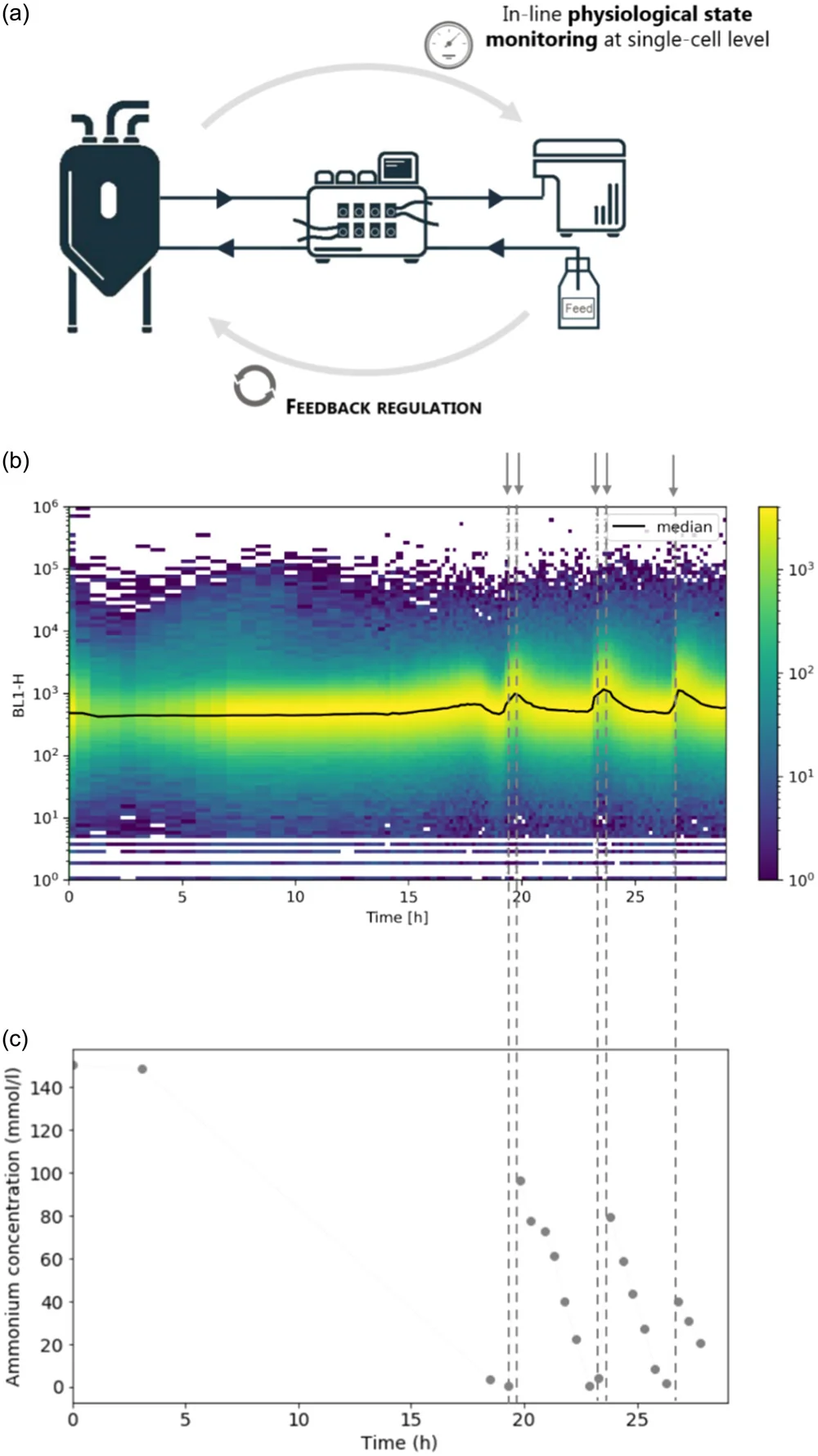
A third line of research applies these ideas to make bioprocesses smarter and more self-regulating. Using a custom platform called the Segregostat, the lab has shown that tracking subpopulation structure can act as an early-warning system, flagging instability in a bioreactor before it becomes visible in standard measurements. This allows the process to be adjusted proactively, rather than reacting only after problems appear. Recently, this approach has been extended to networks of connected bioreactors, where cells move between chambers and redistribute their phenotypic states across the system. This "many small connected reactors" design adds an extra layer of resilience, making the overall process more stable and robust. Read more
Control of synthetic communities
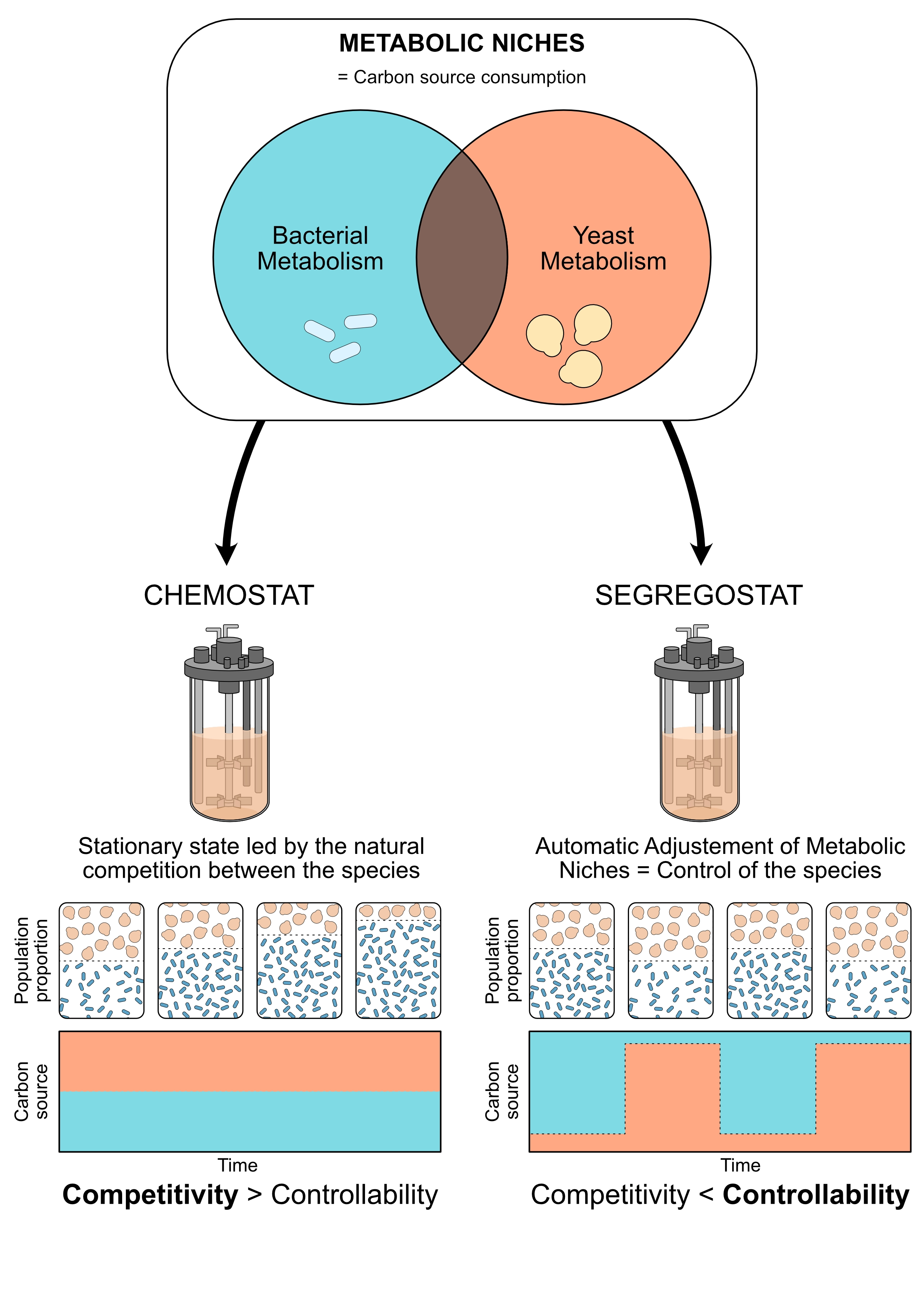
A fourth line of research extends these ideas beyond a single species to communities of different microbial strains working together. Here, each strain plays a role similar to a subpopulation within a single species, and the key design strategy is engineering distinct metabolic niches so that different strains can coexist by relying on different resources or functions, rather than competing directly. A major risk in these communities is "metabolic reversion", a situation where specialised, cooperative strains lose their distinct roles and revert to competing for the same resources once conditions become stressful. Preventing this requires monitoring tools precise enough to track the metabolic identity of individual strains, so that a community's cooperative behaviour can be maintained before it breaks down. Read more